The Best Snacks for Eating Disorder Recovery
DISCLAIMER: Links included in this blog might be affiliate links. Health with Hannah, LLC is a participant in the Amazon Services LLC Associates Program along with other affiliate programs. If you purchase a product or service with the links that I provide I may receive a small commission with no additional charge to you. Thank you for your support!
Snacking is a key component in eating disorder recovery. In fact, I would say that snacks are just as important as meals in your recovery journey (and beyond).
Eating disorders have a tendency to normalize eating small amounts of food. Many people who struggle with disordered eating have a difficult time with snacking, viewing snacks as “extra calories“ that their eating disorder tells them they don’t need. But snacks are an essential part of an eating disorder meal plan, as they help you to meet your nutrition needs and give your brain the energy required to heal.
This post will further explain the role of snacks in eating disorder recovery as well as provide 30+ snack ideas that you can include in your plan.
Table of contents:

Why are snacks beneficial during eating disorder recovery?
Our bodies are designed to eat every few hours. For many people, this does not necessarily line up with the typical three-meal (breakfast, lunch, dinner) routine. If you are in a stage of eating disorder recovery where you have hunger cues, incorporating snacks can help prevent feeling overly hungry going into a meal. When we allow our body to get extremely hungry, we are likely to eat mindlessly and possibly to a point of uncomfortable fullness at the next meal.
Related post: Feel Your Fullness (Intuitive Eating Principle 6)
Eating every 3-4 hours also helps to ensure that we meet our calorie and nutrient needs. It can be difficult to eat enough if we try to fit everything into our main meals. Remember that calories are not our enemy!
Snacks may also be a time where we challenge some of our “fear foods”. For many, snack time can be a little less daunting due to the portion size generally being smaller than that of a meal. If you are not ready for a full portion of your fear food, having it as a snack or as part of a meal accompanied by “safer” foods may be helpful.
What makes a good snack in eating disorder recovery?
A key component in eating disorder recovery is remembering that all foods can fit. There are not any “right” or “wrong” snacks to eat. Fed is best!
That said, there are a few specific approaches that your dietitian may recommend to ensure that you are eating enough at your snacks. If you are in an inpatient or residential eating disorder program, you may be encouraged to follow a meal plan based on exchanges. Exchanges are essentially servings of food from each food group. This approach is helpful when you have a support team, but many people in recovery find exchanges difficult to manage on their own.
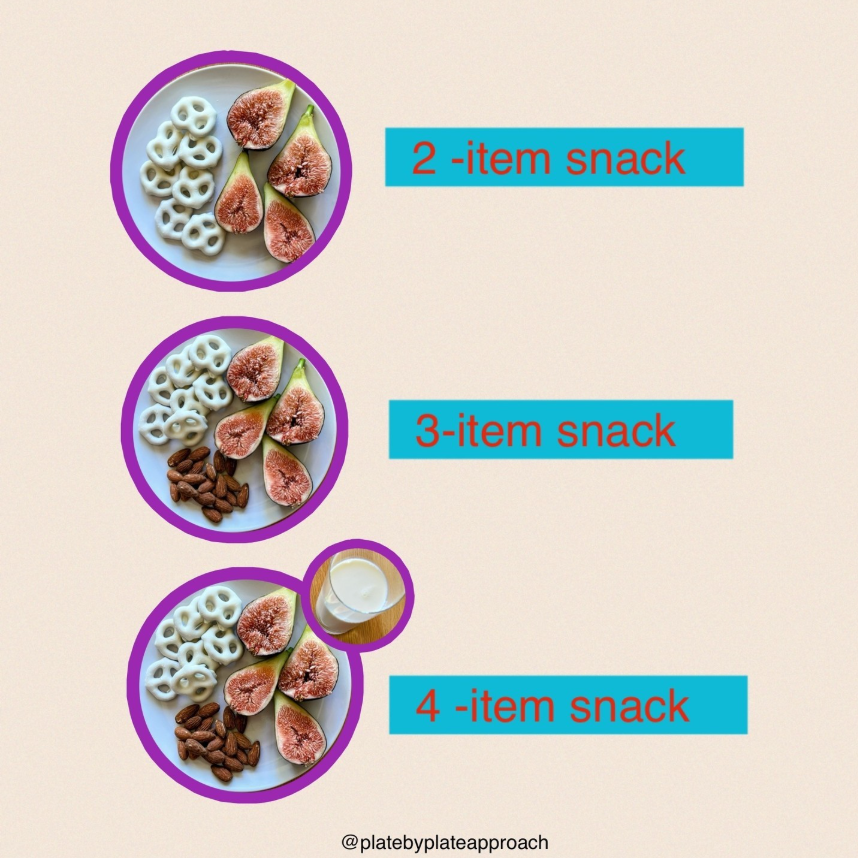
Another commonly used method is The Plate-by-Plate Approach®. This model is simpler, more customizable, and does not require measuring or tracking (which can be a harmful practice for some in recovery).
When following The Plate-by-Plate Approach®, it is recommended to combine at least two food items from different food groups at each snack. I encourage making at least one of these food items an energy-dense choice such as nuts or full-fat dairy. In other words, a two-item snack should not just be a fruit and a vegetable, as this will not provide sufficient calories.
I recommend following @platebyplateapproach on Instragram for tons of real-life examples! The also have lots of printable handouts on their website.
What are some snacks to have during eating disorder recovery?
Your individulized snacking approach will depend on your situation. In general, remember to include at least two food items at each snack, mixing and matching these ideas as needed. The number of items you choose may vary based on your stage of recovery and what else you will be eating that day. Also keep in mind that this list is not exhaustive and there are countless ways to build a recovery-friendly snack.
Refrigerated snacks
If you have access to a refrigerator (or even a lunch box with an ice pack when you’re out and about), here are a few snack options to enjoy:
String cheese, nuts, fruit
Hummus and pita chips
Yogurt, granola, fruit
Bagel and cream cheese or peanut butter
Cheese, crackers, nuts
Guacamole and tortilla chips
Applesauce or fruit pouch (such as GoGo Squeeze), popcorn, string cheese
Peanut butter and jelly sandwich or deli meat and cheese sandwich
Deli meat and cheese rollup with guacamole, hummus, or cream cheese
Overnight oats with nuts or nut butter and fruit
Chia seed pudding with nuts or nut butter and fruit
Tuna salad/chicken salad/egg salad with bread, croissont, or crackers
Pretzels or potato chips and cottage cheese
Frozen waffle, nut butter, fruit
Banana bread with butter, glass of milk
Pre-made smoothie such as Bolthouse Farms or Naked brands
Shelf-stable snacks
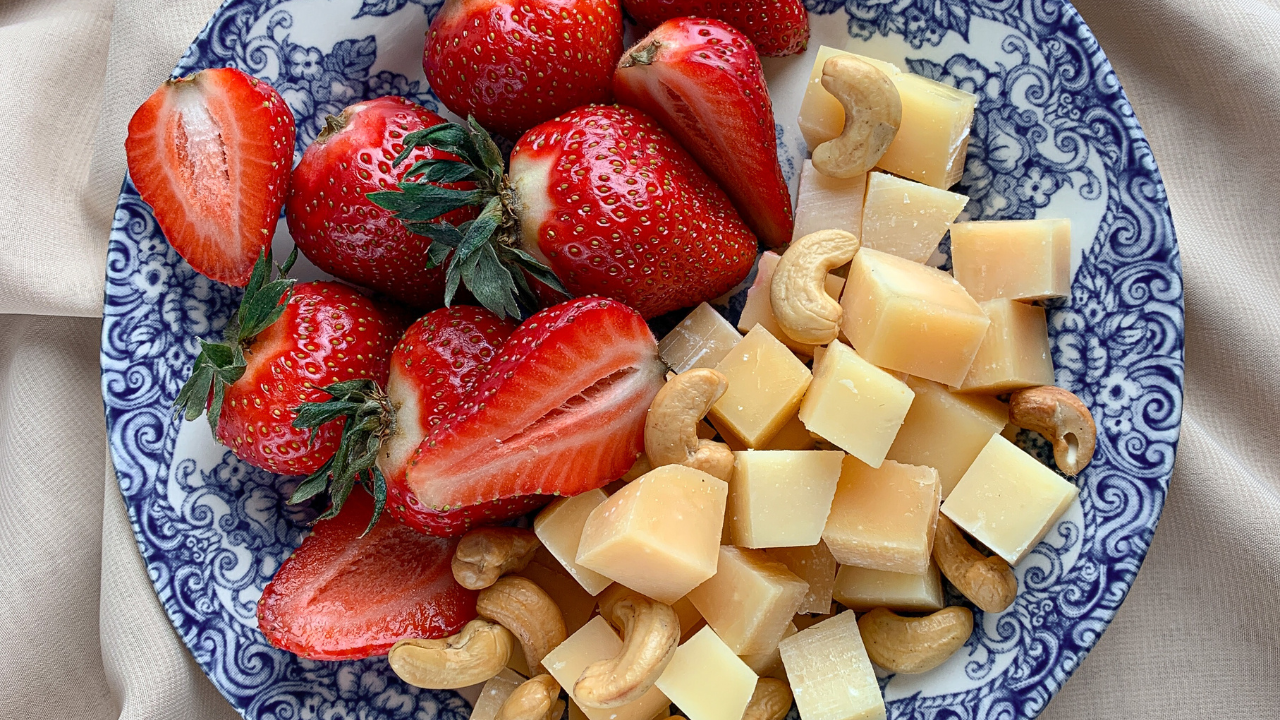
These snacks are great for on-the-go when you don’t have access to refrigeration. Put these in your purse or backpack to help you stick with your eating disorder recovery meal plan even with a busy schedule.
Fruit and nut butter
Trail mix with nuts, dried fruit, chocolate candies
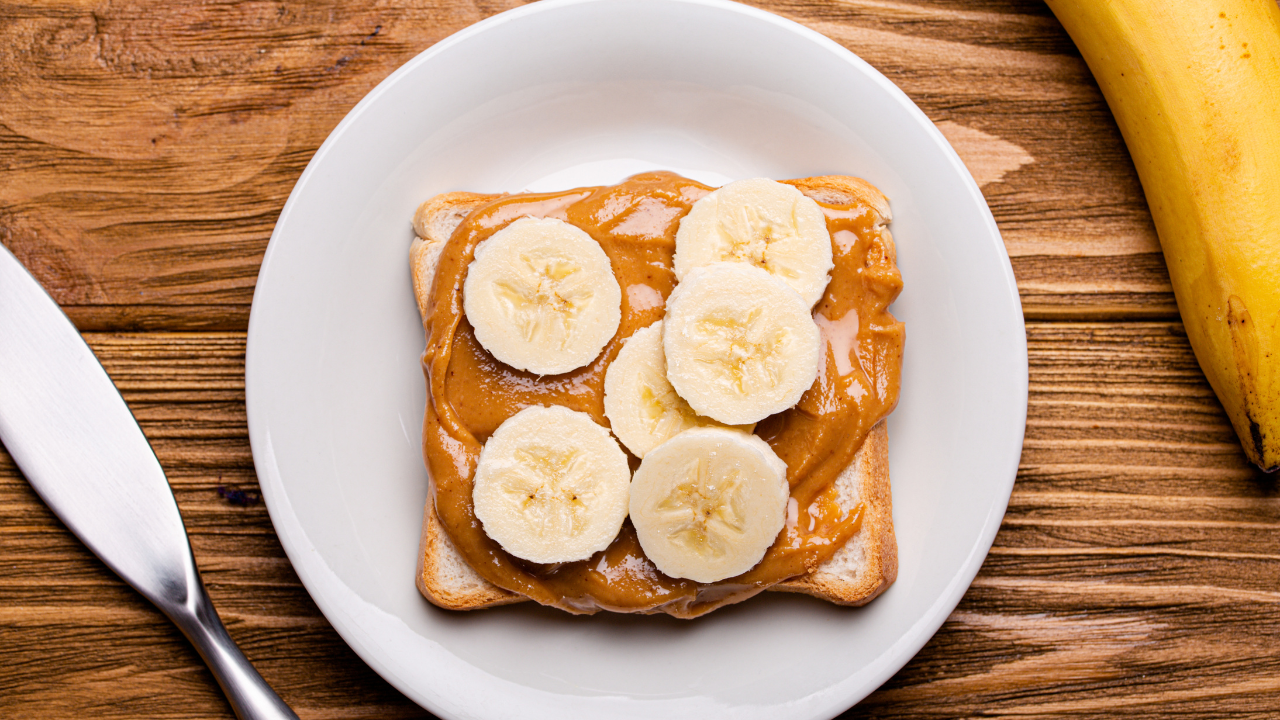
Toast/bread/crackers with peanut butter and banana
Nature Valley granola bar or graham crackers, nut butter
Perfect Bar and fruit
Peanut butter and jelly sandwich
Cliff Builder Bar and fruit
Nuts, pretzels, fruit
Applesauce or fruit pouch (such as GoGo Squeeze), popcorn, beef jerky
Snacks for poor appetite
Depending on your stage of recovery, you may be struggling with poor appetite. For some people, drinkable snacks may be well tolerated. It is still important to have snacks, even if your body is not sending you hunger cues. Once again, mix and match these items with others listed above.
Bolthouse Farms smoothie (may be energy-dense enough to have on its own)
JOVA smoothie kit (may be energy-dense enough to have on its own)
Drinkable yogurt + instant oatmeal packet or toast
Nutrition shakes such as Ensure, Boost, Orgain, or Kate Farms (choose the shakes that have protein, carbohydrates, and fats - not just protein).
You may be able to get nutrition shakes covered by your insurance! Check with your dietitian or doctor to see if this is an option.
Snacks for when you have full-kitchen access
When you are at home or have access to a kitchen, you may be able to get more creative with your snacks. Here are just a few ideas.
Leftovers (casserole, soup, pasta, stir-fry, etc. - there are no rules!)
Quesadilla with leftover meat and/or canned beans + corn (and cheese, of course)
Tuna melt on a bagel or bread
Smoothie made with yogurt, fruit, chia/flax seed, milk
Avocado toast with hemp heart seeds and fried egg(s)
Oatmeal with fruit, nuts and/or nut butter
Bottom line
Snacks are a great way to help us meet our body’s nutrition needs. Plus, they taste good! The way that you incorporate snacks into your eating routine will be unique to you and your eating disorder recovery journey.
What did you think of this post? Leave a comment below!
Disclaimer: this post is for informational and educational purposes only and is not a substitute for professional medical advice.